
If you are looking for a holistic doctor in Durham, Chapel Hill, Raleigh or Cary, you are probably looking for someone who will listen to the whole story: the poor sleep, the stress, the meals you skip, the fact that you feel worn down and nobody has given you a clear reason. That is a reasonable thing to want.
The trouble is that "holistic" is a friendly word with no fixed meaning. It can describe a careful clinician who spends an hour with you, and it can describe a shop with a supplement wall. This guide explains what the word should mean in practice, how the related terms differ, what a good first visit looks like, and how to tell a careful practitioner from a sales pitch.
What does holistic medicine actually mean?
Holistic care looks at the whole person, not just one organ or one symptom. NCCIH describes whole person health as looking at the whole person rather than separate organs or body systems, and it considers many interconnected biological, behavioral, social and environmental areas.1
In plain terms, that means a holistic visit should ask about daily life. NCCIH's page on whole person health names poor sleep, poor diet, a sedentary lifestyle and chronic stress among the factors linked to chronic disease, and it points to the social side of life as well, including the conditions in which people live and work.1 Dr. Werness describes five parts of that picture: Soil (food), Roots (stress), Rhythm (sleep and energy), Ground (time outside and movement) and Circle (the people around you). If you want to go deeper on the stress part, see nervous system regulation.
The word "holistic" does not tell you what training someone has. It describes an approach. So the question to ask is not "are you holistic?" but "what is your training, and what will we actually do?"
Holistic, integrative, functional: what is the difference?
Holistic describes an approach, integrative describes how care is coordinated, and functional medicine is a term that different practices use in different ways. NCCIH defines integrative health as bringing conventional and complementary approaches together in a coordinated way, with well-coordinated care among different providers.2
NCCIH also notes that "functional medicine" sometimes refers to something similar to integrative health, but can also refer to an approach that more closely resembles naturopathy.2 The terms overlap, and two practices that use the same word may work differently.
| Term | What it usually means | What to ask |
|---|---|---|
| Holistic | An approach that looks at the whole person1. It is not a credential | What is your training? |
| Integrative | Conventional and complementary approaches brought together in a coordinated way2 | Who coordinates with my own doctor? |
| Functional | Sometimes similar to integrative health, sometimes closer to naturopathy2 | What do you mean by it? |
| Naturopathic | A training and a title: graduate-level study at a naturopathic medical school, typically four years6 | Which school, and was it accredited? |
Integrative care also exists at academic centers. Duke Health describes its integrative medicine model as a comprehensive, customized, whole-person approach that pairs conventional medicine with complementary care. Its services include acupuncture, health coaching, massage therapy, nutrition counseling, psychotherapy and yoga therapy.3 That is one example of what a large health system offers. Dr. Werness's practice looks at daily habits and works alongside your own doctor.
For a closer comparison of two of these terms, see naturopath vs functional medicine. For how to choose a naturopathic doctor, read how to find a naturopath in Raleigh.
What does a good first visit look like?
A good first visit is unhurried, starts with your history and daily life, and ends with a small number of clear next steps you can share with your own doctor. Duke Health describes its integrative medicine consultation as an hour-long visit that includes a comprehensive review of your health, after you complete a detailed questionnaire.4
At that consultation the provider asks about many areas of life, including eating habits, sleep, daily stress, exposure to toxins and how active you are. The provider also does a physical exam and orders labs or imaging when needed. You leave with a plan to share with your primary care doctor or to follow on your own.4 Duke also says the service requires that you have a current primary care doctor who can partner with its providers.5
Use those details as a benchmark. A good first visit, wherever you go, should:
- Take your history seriously. It should ask what changed, when, and what else was happening in your life.
- Look at the basics first. Food, sleep, stress, movement and the people around you come before anything exotic.
- Include your doctor. NCCIH advises you to find out whether a practitioner is willing to work together with your conventional health care providers.7
- End with one to three steps, not a long list. Dr. Werness starts with one change, not ten.
- Be clear about cost. NCCIH says not to assume your insurance will cover a practitioner's services, and to call your insurer to confirm.7
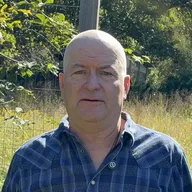
At Ecology of Health, you can begin with the free Garden Check-in, which takes about three minutes and keeps your answers in your browser unless you choose to send them. A free 20-minute first conversation with Dr. Werness follows if it fits. He is a naturopathic doctor based near Durham who works with people across the Triangle, including Raleigh, Chapel Hill and Cary, and by video.
How do you spot a sales pitch?
Watch for promised results, one product that does it all, success stories used as proof, big supplement bundles for everyone and any advice to stop a prescribed medicine. The FDA lists several of these as common signs of health fraud.8
The FDA's warning signs include:
- One product that does it all. Be suspicious of anything said to fix a wide range of diseases.8
- Personal success stories as evidence. The FDA says testimonials are easy to make up and are not a substitute for scientific evidence.8
- Quick fixes. The FDA notes that few conditions can be addressed quickly, even with legitimate products.8
- Conspiracy theories, such as a claim that the government or drug companies are hiding an answer.8
NCCIH adds that you should ask whether there is scientific evidence, not just personal stories, to back up what you are told. It warns against using an unproven approach in place of conventional care, or as a reason to delay seeing your provider.9
Supplements are a common place for sales pressure. NCCIH says the FDA is not authorized to review dietary supplements for safety and effectiveness before they are marketed, that "natural" does not always mean "safe," and that supplements may interact with your medicines.10 If a practitioner wants you to buy a long list of products on the first visit, slow down. Ask your doctor or pharmacist before you start any supplement, especially if you take medicines.
A careful practitioner, by contrast, will explain why they are suggesting each step, tell you what is not known, never ask you to stop a medicine and be comfortable with you checking with your own doctor.
Where can you find holistic care across the Triangle, in person or by video?
You can find it in several places: an academic integrative program, a naturopathic practice, or your own doctor's office if they take a whole-person view. The right one depends on what you need and how you want to be seen.
Ask where a practice sees people and whether it offers video visits. Dr. Werness works with people by video, which can help if you live in Chapel Hill, Cary or Raleigh and do not want to add a drive to a busy week. Video can cover sleep, food, stress and symptoms. It does not replace an exam or tests your own doctor needs to do.
Whoever you choose, tell your own doctor. NCCIH advises you to tell all your health care providers about the complementary approaches you use, so everyone can keep your care coordinated and safe.7
When should you see your own doctor first?
See your own doctor first if a symptom is new, severe, getting worse or has no clear cause. Holistic care works alongside that care, not in place of it. Cleveland Clinic says to talk to your healthcare provider if you are tired all the time, and to call if tiredness lasts more than a few days, makes it hard to work or handle daily tasks, started suddenly, has no clear cause or comes with weight loss.11
Cleveland Clinic says to get immediate medical attention if you have fatigue along with shortness of breath, or chest, arm or upper back pain, a heartbeat that is unusually fast, slow, pounding or irregular, a headache or vision changes, nausea, vomiting or abdominal pain, or muscle weakness.11 In an emergency, call 911.
It also lists thoughts of harming yourself or others among those signs.11 If that is you, call 911, or call or text 988, the Suicide and Crisis Lifeline. Stress and low mood are real health problems, and they deserve a doctor's attention too.
When you are ready for a calmer start, take the free Garden Check-in or ask for a conversation with Dr. Werness. He works alongside your own doctor and never asks anyone to stop a medicine.